Five Questions, Five Answers: How Detroit Has Adjusted After Ben Johnson’s Departure

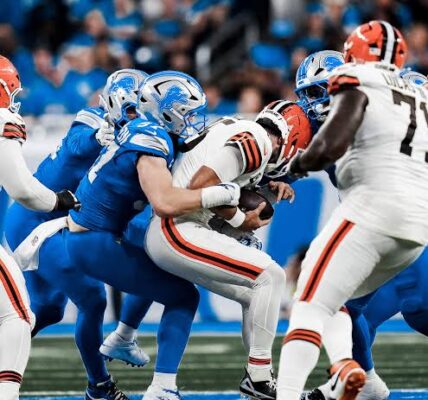
The Los Angeles Rams have climbed back to the top of the NFC standings and remain there for now, but their Week 15 opponent—the Detroit Lions—stands firmly in the way. Sean McVay’s Rams are 2–2 against Detroit, though the Lions have taken the last two meetings, including a 26–20 overtime victory in this year’s season opener. The Rams at least get the benefit of home field this time, after playing the previous two matchups in Detroit.
With a crucial showdown between two NFC contenders fast approaching, I spoke with Ryan Mathews of Pride of Detroit to learn how the Lions have adjusted after losing Ben Johnson and Aaron Glenn, what it takes to contain Jahmyr Gibbs, and more.
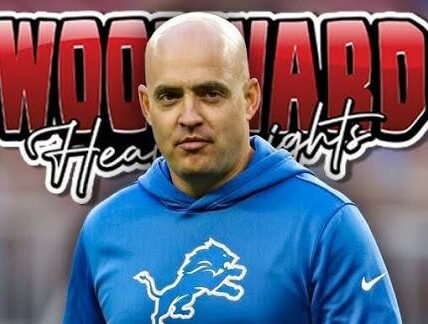
Q — The exits of Ben Johnson and Aaron Glenn were a major offseason storyline. Detroit has clearly gone through some ups and downs this year. How would you evaluate the performance of offensive coordinator John Morton and defensive coordinator Kelvin Sheppard so far?
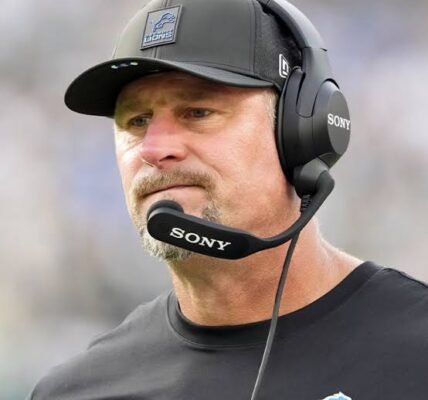
A — While John Morton technically remains the offensive coordinator, Dan Campbell took over play-calling duties about a month ago. Campbell has continued stressing how essential Morton is during the week in terms of planning and preparation, but shifting who calls plays was necessary. The offense had lost its flow and was stuck in too many empty drives. Since Campbell stepped in, Detroit hasn’t been perfect, but the offense looks steadier and has avoided the frequent stalls that plagued earlier games.
Kelvin Sheppard’s work stands out in comparison to his mentor, former defensive coordinator Aaron Glenn. Glenn built a reputation for maximizing limited talent, particularly last year when nearly every defensive starter spent time on injured reserve. Sheppard inherited a more gifted unit, though injuries have still complicated things. What separates him from Glenn is his willingness to change weekly. Glenn often stuck tightly to his press-man approach and his preferred pass-rush philosophy. Sheppard shares some of those principles, but we’ve also seen him—like in last week’s Dallas game—prioritize quicker pressure even if it risks leaving open lanes in the run game.
Q — Jahmyr Gibbs is the engine behind Detroit’s playoff hopes. The Rams have been strong against the run this season. How should they attempt to slow him down?
A — It’s fascinating that the Rams have defended the run so well despite using one of the league’s lowest stacked-box rates (19.8%). To bottle up Gibbs, Los Angeles must have a plan for the right side of Detroit’s line. Rookie guard Tate Ratledge and All-Pro right tackle Penei Sewell have paved the way for Gibbs to average 7.2 yards per carry on 89 of his 186 attempts. He’s also having his best receiving year—58 catches, 8.2 yards per reception, and 1.87 yards per route run, which ranks third among NFL running backs.
Committing extra attention to Gibbs may be the only realistic way to limit him, but even then, Detroit’s offense can still strike quickly with players like Amon-Ra St. Brown and Jameson Williams. That’s how the Lions remain one of the league’s most dangerous units despite losing some firepower along the offensive line.
Q — Detroit sits at 8–5 and third in the NFC North after earning the conference’s top seed last season. Winning the division seems unlikely now. No matter what happens Sunday, how do you see the rest of the Lions’ season unfolding?
A — What happens in Los Angeles could shape the entire trajectory. As the weeks tick away, Detroit’s margin for error shrinks. With four games left, the Lions probably need to go at least 3–1, and ideally those wins come against NFC teams: the Rams, the Vikings, and the Bears. Losing to the Rams would make it nearly impossible to beat out any NFC West teams in conference record tiebreakers. If their only remaining loss comes against L.A., then Detroit would need Chicago to finish 2–2, which is plausible.
In simplest terms: if the Lions drop this game, they’ll likely have to run the table and still receive some outside help to sneak into the postseason. That’s a difficult ask for any NFL team. At this moment, the situation really does feel like a coin flip—reflected in their roughly 40% playoff odds noted by The Athletic.
Q — Detroit has taken the last two games in the series, including the overtime win that opened the 2024 season. What’s your prediction for this matchup?
A — From Detroit’s standpoint, this matchup has all the ingredients of an offensive shootout. The Lions’ secondary is going up against one of the most efficient passing games in the league, and I’m not convinced they can consistently hold up. Matthew Stafford’s pre-snap mastery and ability to manipulate defenders puts him among the most skilled quarterbacks the league has seen. Detroit has to assume points will be scored quickly and often, meaning the Lions must answer almost every Rams possession with one of their own.
Their best hope is winning the turnover battle and forcing the Rams into mistakes. Carolina’s upset a few weeks ago demonstrated that it’s possible, though even with a 3–0 turnover advantage, the Panthers barely escaped with a three-point win.
No matter how the game flows—high scoring or otherwise—I think the Rams edge it out behind their defense and relentless offense. My pick: Rams 38, Lions 31.
Q — What’s one question you’d pose to Rams fans?
A — Be honest: when the Rams traded for Matthew Stafford, did you truly understand how good of a quarterback you were getting? Don’t worry—you can give the real answer.