
The Detroit Lions welcomed a familiar nemesis to Ford Field in a crucial Week 16 matchup with postseason implications firmly in place.
Longtime NFC North tormentor Aaron Rodgers, who spent years haunting Detroit fans as the Green Bay Packers’ quarterback, was back—this time wearing a Pittsburgh Steelers uniform. While the veteran passer no longer has elite offensive weapons at his disposal, he entered the contest having guided Pittsburgh to eight wins and was looking to add another against a desperate Lions squad.
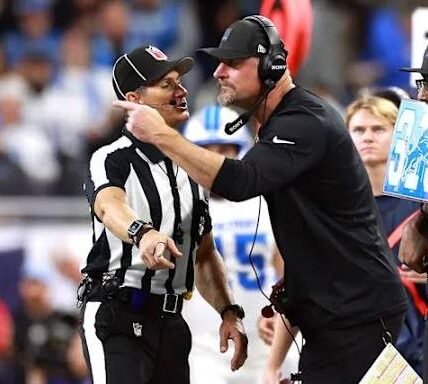
“He’s getting the ball out quickly, staying efficient, and not taking punishment,” head coach Dan Campbell said before kickoff in an interview with Dan Miller.
“He’s diagnosing defenses fast and consistently finding open receivers.”
With Detroit fighting to stay alive in the NFC playoff race, the stakes could not have been higher. Unfortunately for the home team, both sides of the ball came up short in key moments. A porous run defense and a disastrous third quarter proved too much to overcome, despite a late rally that had fans on edge until the final moments.
A costly late defensive penalty erased Detroit’s chance at a potential game-winning drive, sealing a 29–24 loss.
Below are the key takeaways from the defeat.
Veteran Tight End Provides Spark, but Lions Come Up Empty Early
After Pittsburgh deferred the opening kickoff, Detroit’s offense sputtered to start the game, opening with a quick three-and-out.
The Steelers struck first on their initial possession. Although Aidan Hutchinson halted momentum with a nine-yard sack of Rodgers, Pittsburgh still capitalized, as kicker Chris Boswell drilled a 59-yard field goal for a 3–0 lead.
Detroit responded by leaning on tight end Anthony Firkser, who caught three passes for 34 yards on the Lions’ next drive. However, once again gambling near the goal line, Campbell opted against a field goal. The decision backfired when Detroit failed to convert on fourth-and-goal, as Joey Porter Jr. broke up a pass intended for Amon-Ra St. Brown.
Run Game Stalls Out Early
Establishing the ground attack has been a formula for success for Detroit, but that rhythm was missing early. Entering the game, the Lions were nearly unbeatable when surpassing 100 rushing yards—yet Pittsburgh’s front quickly disrupted that plan.
Steelers defenders repeatedly penetrated the backfield, with Jack Sawyer and Alex Highsmith creating havoc and limiting Jahmyr Gibbs and David Montgomery.
Detroit finally evened the score midway through the second quarter, finishing an eight-play, 44-yard drive with a 36-yard field goal by Jake Bates. Jared Goff was efficient early, completing 10 of his first 14 passes for 104 yards, while Jameson Williams made a pair of timely catches.
Faster Pace Jumpstarts Detroit’s Offense
Late in the second quarter, Detroit increased its tempo, and the offense began to find its stride. Goff connected with Isaac TeSlaa, Gibbs, and Williams to move the ball efficiently down the field.
Just after the two-minute warning, the Lions broke through with their first touchdown. Goff hit TeSlaa on a 20-yard scoring strike, completing a six-play, 62-yard drive that lasted just over two minutes and gave Detroit a 10–3 advantage.
Pittsburgh still had time for one final drive before halftime.
Steelers Even the Score on a Bizarre Touchdown
Defense dominated much of the first half, and until late, both teams struggled to sustain offense. Hutchinson continued to shine, registering two sacks before the break.
However, Rodgers kept Pittsburgh alive on a critical third-and-10 completion to Adam Thielen. Two plays later, chaos ensued. Rodgers underthrew Kenneth Gainwell, but the running back somehow secured the ball while falling to the ground. Untouched, Gainwell scrambled to his feet and sprinted into the end zone, tying the game on an improbable play.
Harper Forces Turnover to Open Second Half
Detroit’s defense faltered coming out of halftime, as the Steelers moved the ball effectively through both the air and on the ground. Contributions from Thielen, DK Metcalf, and Jaylen Warren pushed Pittsburgh deep into Lions territory.
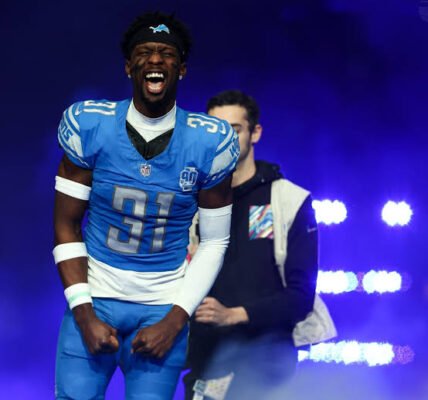
Momentum briefly shifted when safety Thomas Harper forced a fumble, dislodging the ball from Washington. Linebacker Jack Campbell recovered, and after review, officials confirmed the ball came out before the receiver hit the ground.
Safety and Time-Consuming Drive Tilt the Game
Detroit’s offense took over pinned deep inside its own territory. After two short plays, Goff was dropped in the end zone by safety Kyle Dugger, resulting in a rare safety and giving Pittsburgh a 12–10 lead.
The Steelers seized control from there, embarking on a grueling 17-play drive that consumed nearly 10 minutes of clock time. Detroit ran just three offensive plays in the entire third quarter and entered the fourth trailing 15–10.
Second-Half Defensive Collapse Seals Lions’ Fate
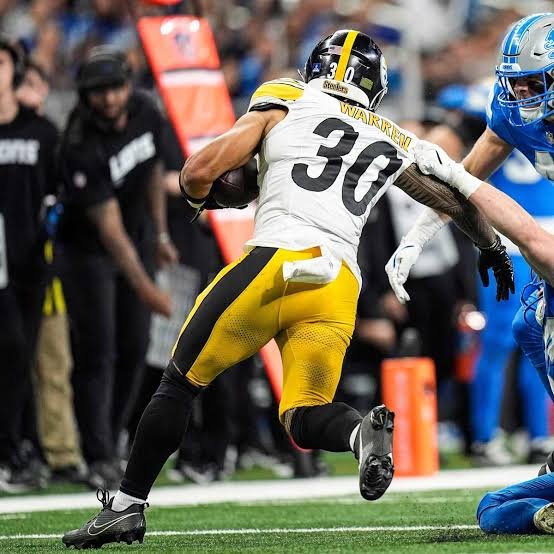
Jaylen Warren extended the Steelers’ advantage with a 45-yard touchdown run, making it 22–10. Detroit answered with an impressive drive of its own, highlighted by a fourth-down conversion and multiple receptions by Kalif Raymond.
Facing a 12-point deficit, Raymond hauled in a short pass and turned it into a 27-yard touchdown, cutting the margin to 22–17.
But once again, Detroit’s defense failed to deliver when it mattered most. Warren ripped off another 45-yard scoring run, restoring a two-score cushion.
Jahmyr Gibbs later found the end zone to make it 29–24, and Pittsburgh missed a 37-yard field goal that could have iced the game. Still, Detroit could not capitalize, and a late defensive penalty extinguished the Lions’ final hope.