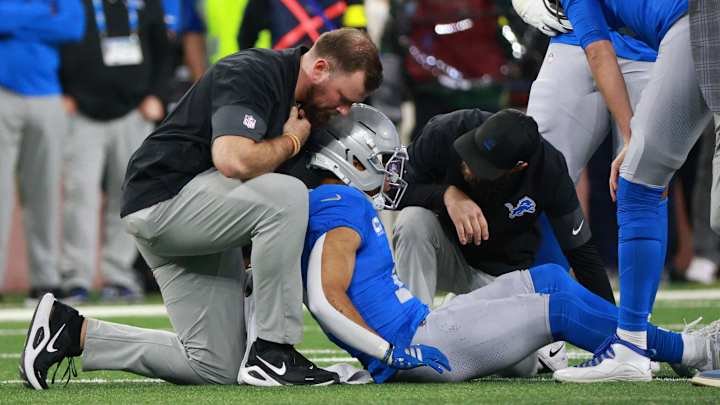

Injuries have undeniably played a role in the Detroit Lions’ struggles, but they cannot be used as the sole explanation for how this season has unfolded.
Football is a brutal sport, and injuries are unavoidable. For the Lions, health issues have piled up over the last two years, making the challenge even steeper.
Sitting at 8-7 and relying on unlikely outcomes to reach the postseason, Detroit is clinging to faint hope. If that miracle run somehow happens, critiques like this may seem unnecessary. But if the season ends without a playoff berth, the organization and fanbase cannot simply point to injuries and move on.
Last year, that explanation carried real weight.
The Lions finished 15-2 and managed to stay competitive despite losing key contributors, including pass rusher Aidan Hutchinson and cornerback Carlton Davis III. The roster held together long enough to contend, but the lack of depth eventually caught up with them at the worst possible time. That disappointment, while painful, was understandable.
This year tells a different story. Injuries are only one piece of a much larger problem.
Coaching changes have not paid off
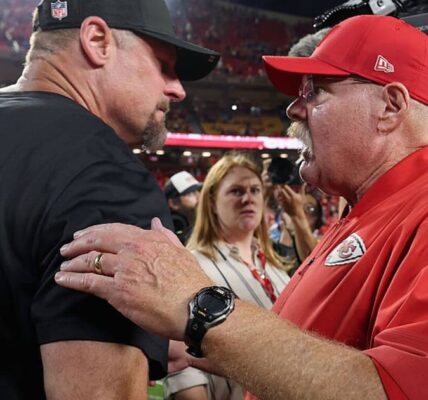
The revamped coaching staff has struggled to find its footing. Offensive coordinator John Morton’s tenure as play-caller was short-lived after a disappointing showing coming out of the bye against Minnesota, leading head coach Dan Campbell to take over those responsibilities.
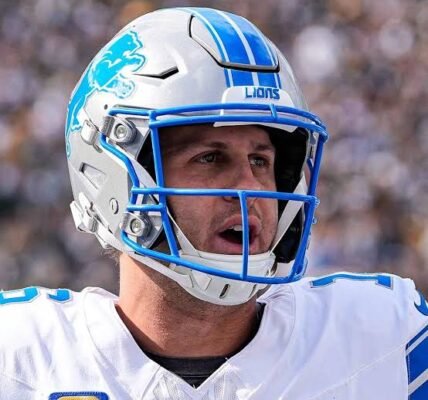
Since that switch, quarterback Jared Goff has thrived, recording four of his five career 300-yard games under Campbell, including a current run of three in a row. Wide receiver Jameson Williams has also seen a dramatic increase in production, more than doubling his average yards
per game.
Even so, Campbell’s play-calling has been far from flawless. The Lions continue to falter on third and fourth downs, and Campbell’s decision-making on when to attempt conversions has raised eyebrows.
David Montgomery’s workload has dropped significantly as the offense leans more heavily on Jahmyr Gibbs, changing the team’s offensive balance.
While the offense has clearly improved, it begs the question of whether the change came too late and whether Campbell should continue calling plays next season.
Defensively, coordinator Kelvin Sheppard showed early promise.
The unit delivered strong performances against Tampa Bay and Philadelphia despite being short-handed. Since then, however, things have spiraled. Over the past five games, Detroit has surrendered more than 31 points and nearly 460 yards per contest.
Injuries in the secondary have hurt, but schematic issues are just as damaging. Receivers routinely find open space in the middle of the field, turning even long-yardage situations into easy conversions. Replacement players can only compensate so much when the system itself leaves them exposed.
Preparation has also been questionable. Extra rest days should be an advantage, yet the Lions are just 2-5 in those scenarios. That record suggests deeper problems with how the team uses preparation time. In-game adjustments have been just as troubling, particularly after halftime.
The past two weeks have featured disastrous third quarters, with the offense failing to score while losing the time-of-possession battle badly. That simply cannot happen in must-win situations.
Roster decisions under scrutiny
General manager Brad Holmes has earned goodwill for assembling and extending much of the team’s core, but this season has highlighted some significant misses.
One ongoing issue is cornerback. Despite multiple attempts, Holmes has yet to land a true shutdown player at the position.
Terrion Arnold may still grow into that role, and players like Amik Robertson and Rock Ya-Sin have been solid in limited responsibilities, but opposing quarterbacks continue to target Detroit’s corners with success.
The offensive line has its own concerns. Frank Ragnow’s unexpected retirement is understandable, but the lack of reliable depth behind the frequently injured Taylor Decker remains an issue.
At guard, the absence of veteran Kevin Zeitler has been felt. While Christian Mahogany and Tate Ratledge have held their own, neither had prior regular-season experience. A steady veteran presence might have helped offset Graham Glasgow’s struggles and allowed Ratledge more time to develop.
Perhaps the most frustrating aspect of the season was Detroit’s inactivity at the trade deadline. Seeing division rivals and playoff hopefuls make bold moves while the Lions stood still was difficult to accept. Watching Green Bay land Micah Parsons, followed by aggressive trades from teams like Indianapolis and Dallas, only amplified that frustration.
Holmes has shown a willingness to trade significant draft capital to move up for a wide receiver who has just 12 catches this season. Given that, it’s fair to wonder why similar aggression wasn’t used to bring in an experienced veteran to address immediate needs.
Star players haven’t consistently delivered
Despite the injury list, many of Detroit’s top players have been available all season. Yet their performances have been uneven.
Kerby Joseph, for example, still leads the team with three interceptions despite missing the last nine games. Over that same stretch, the Lions have totaled just six interceptions and three fumble recoveries.
The lack of takeaways has been a major factor in their record, especially when compared to the Bears, whose turnover-heavy defense has helped them reach 11-4.
Up front, Hutchinson has been a constant presence in the backfield, consistently pressuring quarterbacks.
However, those pressures haven’t always translated into game-changing sacks. His 11.5 sacks match a career high, but he’s recorded multiple sacks in a game only twice this season. While opposing offenses clearly scheme to limit him, there have been moments where opportunities slipped away.
Offensively, Goff and Williams have been bright spots, but consistency has been lacking elsewhere. Gibbs has been bottled up over the past two weeks after an up-and-down stretch earlier in the season. Amon-Ra St. Brown, typically reliable, has had costly drops at critical moments. One of the few steady performers has been Penei Sewell, who leads all tackles with a 95.8 grade from Pro Football Focus.
The bigger picture
Detroit’s 8-7 record is the result of many interconnected issues. Injuries played a role, but unlike last season, the Lions failed to adjust and compensate. Those struggles have revealed deeper shortcomings in coaching decisions, roster construction, and player consistency.
If this season ends without a playoff appearance, injuries should be part of the conversation—but they cannot be the entire story.