Caleb Williams surging as Bears near playoffs, must stay hot against Lions

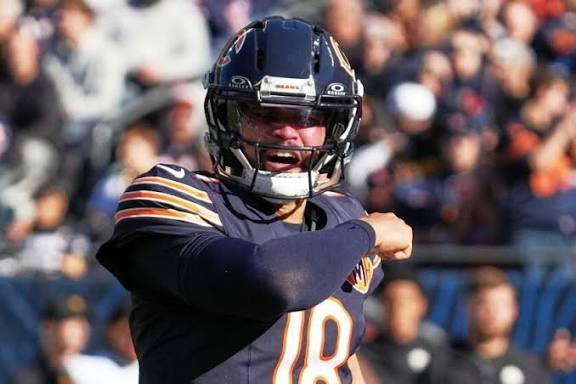
Chicago Bears quarterback Caleb Williams couldn’t be playing much better as the team heads into the regular-season finale, and sustaining that level of performance against the Lions will be vital with playoff positioning at stake.
Williams isn’t just chasing history by potentially becoming the first Bears quarterback to reach 4,000 passing yards in a season. More importantly, he’s trying to prove that the surge he’s shown recently is real and sustainable as the Bears push for the No. 2 seed in the NFC.
The season has already been a success, but whether it’s remembered as something more will depend largely on how Williams finishes. Over the last three games — victories over the Packers and Browns and a narrow defeat against the 49ers — he’s looked like a quarterback hitting his stride at the perfect time.
During that stretch, Williams threw for 822 yards, tossed six touchdown passes, didn’t throw a single interception, and posted a passer rating of 103.1. While he’s had hot streaks before, this run stands out because it came against quality opponents and in the middle of a playoff chase.
Given the franchise’s long-running struggles at the position — the Bears have cycled through 42 starting quarterbacks since their 1985 Super Bowl win — it’s notable that Chicago remains the only NFL team without a 4,000-yard passer.
Williams is within striking distance, needing 270 yards to reach the mark and just 109 yards to surpass Erik Kramer’s franchise record of 3,838 set in 1995. Kramer also holds the team’s single-season touchdown record with 29; Williams would need four scores Sunday to match it.
That won’t be easy. Even though the Lions are out of the playoff picture, their defense ranks in the middle of the league, sitting 18th overall and 19th against the pass. They also generate pressure at an average rate, led by standout edge rusher Aidan Hutchinson. If Williams reaches those milestones, it will be earned.
Head coach Ben Johnson downplayed the significance of the yardage chase, calling it more of a curiosity than a goal. While the statistic carries symbolic weight for a franchise long defined by quarterback struggles, Johnson emphasized that winning — not records — is the priority.
Johnson pointed to Williams’ continued improvement, especially his accuracy at all levels of the field and his growing understanding of how defenses attack him. According to the coach, the real objectives are efficiency, decision-making, and scoring more points than the opponent, not chasing individual numbers.
Still, statistics often reflect progress, and Williams’ season-long growth is evident. Johnson has referenced advanced metrics like Expected Points Added and set benchmarks for completion percentage, while also stressing situational football — turnovers, third downs, and red-zone efficiency.
Williams hasn’t met every target. His completion rate sits at 57.9%, the lowest in the league. But nearly every other indicator is trending upward. His average passing yards per game have jumped from 208.3 last season to 233.1.
He’s increased his touchdown total from 20 to 25 while matching last year’s six interceptions. His yards per attempt have climbed, his passer rating has improved to 90.3, and he’s dramatically cut down on sacks — from a league-high 68 last year to just 23 this season.
He now ranks among the league leaders in passing yardage and touchdown throws, while also posting the lowest interception rate in the NFL.
Some of that progress can be credited to a much-improved offensive line and better support around him. But Williams himself has taken a clear step forward, particularly in how he navigates the pocket and processes pressure.
His relationship with Johnson has evolved significantly since training camp, when the coach frequently voiced frustration with the offense’s pace and execution.
Williams adjusted, and Johnson refined his approach, finding a balance between structure and the creativity that makes Williams dangerous.
Even so, their collaboration is still young. They won’t have worked together for a full calendar year until later this month.
Only recently has Johnson felt comfortable expanding the offense, opening parts of the playbook he previously wasn’t sure Williams and the unit could handle. Both speak as if this partnership is just beginning, aligning with the organization’s long-term vision at quarterback.
The playoffs offer the best environment to test that belief. How Williams performs under postseason pressure will be a strong indicator of whether he’s ready to elevate his game again next season.
The Bears feel he’s been building toward that moment over the past month. A strong showing against Detroit would only reinforce that confidence — especially if he plays well enough to exit early, healthy and rested, with bigger challenges ahead.