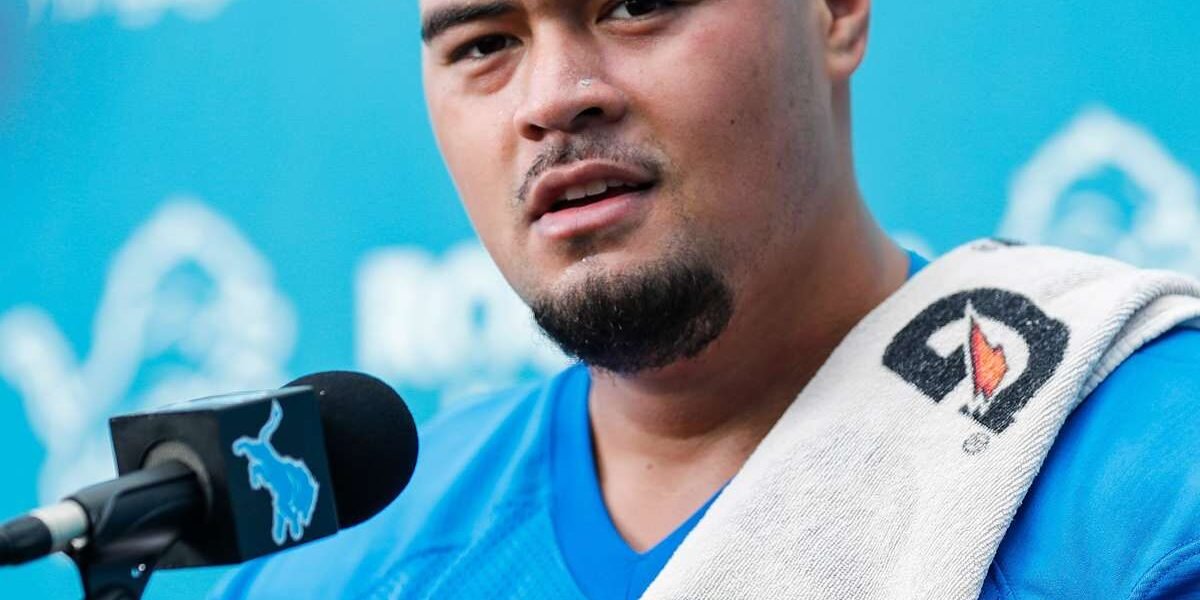
Lions’ disappointing draft selection may be nearing the end of his run in Detroit

When the Detroit Lions used a fourth-round pick on Giovanni Manu in the 2024 NFL Draft, the move was widely viewed as a long-term bet rather than an immediate solution.
The offensive tackle from Canada was drafted as a developmental piece—someone who could provide depth behind Taylor Decker early on and, ideally, grow into a starting role as Decker approached the later stages of his career.
Fast forward to now, and that vision is starting to unravel. With Decker reportedly weighing retirement ahead of the 2026 season, the Lions are facing a looming decision at left tackle. Unfortunately, Manu has yet to show meaningful progress that would suggest he’s ready to step into that role if needed. That reality represents a setback for Detroit’s long-term offensive line planning, and general manager Brad Holmes hasn’t shied away from acknowledging it.
Following the conclusion of the 2025 season, Holmes admitted there’s uncertainty surrounding Decker’s future and emphasized that the team can’t simply rely on a developmental pick to solve such an important position. While Manu was always expected to need time, Holmes made it clear that development isn’t guaranteed, noting that some picks simply don’t pan out the way teams hope.
With the 2026 NFL Draft drawing closer, it’s becoming increasingly likely that Manu’s tenure in Detroit could be nearing its end.
Although Manu remains under contract through 2027 and carries a minimal cap hit, the Lions could still decide to move on. Cutting him after training camp would free up a little over $1 million in cap space—an easy decision if Detroit selects a tackle in the upcoming draft who’s capable of contributing right away.
The Lions are expected to heavily target offensive tackles in the draft, with prospects such as Kadyn Proctor, Gennings Dunker, Spencer Fano, and Caleb Lomu all potentially on their radar. Several of these players are projected to be ready to start immediately, while Proctor is viewed more as a depth option early in his career.
At this point, Manu has had two seasons to develop and hasn’t been able to stay healthy or make a noticeable leap. Given that context—and with a deep class of tackle prospects available—Detroit may need to accept that the pick didn’t work out. The team can’t afford to gamble on an unproven option at a premium position, especially when the front office has already acknowledged that patience doesn’t always lead to results.