
Brad Holmes’ Draft Strategy Under the Microscope: Did the Lions GM Miss Key Opportunities in Free Agency? (SEO Version)
Detroit Lions general manager Brad Holmes has built a reputation as one of the NFL’s best draft evaluators, rapidly transforming a broken roster into a legitimate contender. After clearing the cap damage and roster issues left behind by the Bob Quinn–Matt Patricia era, Holmes used the NFL Draft as his primary rebuilding engine. Today, many analysts consider the Lions’ roster one of the most complete young cores in football—yet critics still question several of Holmes’ recent decision-making choices.
Holmes’ Draft Rebuild: Hits, Steals, and Rising Stars
Once Holmes negotiated the trade for Jared Goff, Detroit’s rebuild accelerated. His early draft classes were immediate home runs, headlined by first-round standouts:
Penei Sewell
Aidan Hutchinson
Jameson Williams
Jahmyr Gibbs
Jack Campbell
Terrion Arnold
Holmes also made bold, aggressive moves by trading up for players like Brian Branch and Sam LaPorta, both now viewed as among the top players at their positions. His ability to identify underrated stars—especially Amon-Ra St. Brown—has earned him widespread recognition.
But the 2025 NFL Draft has not delivered the same immediate results.
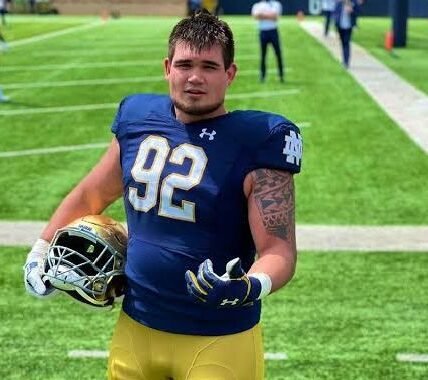
First-round DT Tyleik Williams has struggled, earning only a 54.5 PFF grade.
Second-round guard Tate Ratledge became a starter and is proving valuable despite difficult circumstances.
Rookie WR Isaac TeSlaa continues to flash exciting playmaking upside.
Unfortunately, injuries to rookies Ahmed Hassanein, Miles Frazier, and Dan Jackson have slowed overall production. Still, Holmes’ draft reputation remains largely intact.
Holmes’ Free Agency Struggles: Missed Opportunities or Smart Restraint?
Free agency has been Holmes’ weakest area. The most notable miss was the Cam Sutton contract—$33 million for a season where he surrendered 627 yards and five touchdowns.
One major success, however, was veteran guard Kevin Zeitler, signed to a one-year, $6 million deal in 2024. Zeitler delivered an elite 86.8 PFF grade, ranking No. 3 among all NFL guards. But Detroit let him walk in 2025, and he has since declined in Tennessee with a 63.8 grade and 4 sacks allowed.
In hindsight, the Lions may have been correct not to overpay for an aging lineman.
The Ragnow Situation: A Costly Blow to Detroit’s Offense
The Lions suffered a devastating setback when Frank Ragnow, their four-time Pro Bowl center, retired on June 2, 2025. His absence created an irreplaceable gap. Holmes may not have known about Ragnow’s retirement plans in March, but the declining durability of both Ragnow and Taylor Decker was no secret.
In 2025, Detroit’s offensive line has been ravaged by injuries, forcing backups and practice-squad players into starting roles. The loss of both Ragnow and Zeitler has had a massive impact on Jared Goff’s protection and Detroit’s run game.
The fan base briefly celebrated when news broke that Ragnow would return from retirement—only to learn he failed his physical due to a hamstring issue, ending hopes of a comeback.
Should Holmes Have Signed More Offensive Linemen?
One of the biggest free-agent stories this offseason was Drew Dalman, the former Falcons center. Chicago aggressively signed him to a 3-year, $42 million deal, and Dalman is now thriving with an 82.6 run-block grade.
Joining Dalman in Chicago’s revamped O-line:
Joe Thuney – acquired for a 2026 4th-round pick; signed for 2 years, $35 million
Jonah Jackson – former Lions guard, traded for a 2025 sixth-rounder; signed for 1 year, $12.5 million
This trio has transformed Chicago’s offense and helped elevate quarterback Caleb Williams, pushing the Bears to a 9-3 record and first place in the NFC North.
The big question:
Did Holmes miss on Dalman and other offensive linemen by focusing free-agency resources on defense?
Detroit invested heavily in CB D.J. Reed ($48M), LB Grant Stuard, and DL Roy Lopez—but the offensive line remains the team’s biggest weakness.
Playoff Outlook: Can the Lions Still Make the Postseason?
At 7-5, the Detroit Lions no longer control their own playoff destiny. With five critical games remaining—including two divisional matchups—they must win out and hope for help elsewhere in the NFC.
Detroit’s postseason hopes likely depend on:
The offensive line stabilizing
Improved pass protection for Goff
Creating consistent running lanes
Health improving across key positions
If the offensive line cannot elevate its performance, Detroit could face a disappointing ending to a season that began with legitimate championship expectations.