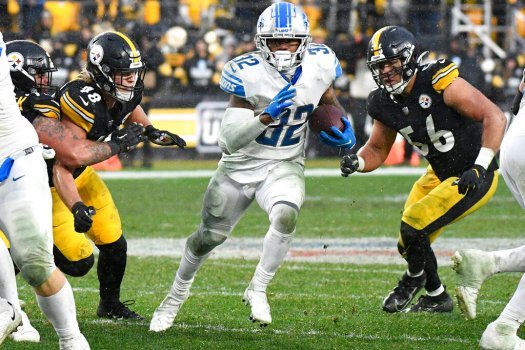
Why the Lions’ Last-Second Game-Winning Touchdown Was Overturned in Heartbreaking Loss to Steelers

The Detroit Lions suffered one of the most controversial and heartbreaking losses of the NFL season in their Week 16 matchup against the Pittsburgh Steelers, as a last-second touchdown was overturned due to a penalty, sealing a devastating defeat.
With their playoff hopes on the line, the Lions mounted a desperate late-game drive, needing a touchdown in the final seconds to secure a crucial win. Quarterback Jared Goff delivered a short pass to wide receiver Amon-Ra St. Brown near the goal line as time was about to expire.
St. Brown was ruled down just short of the end zone, but before he could be tackled, he lateraled the ball backward to Goff. Goff then crossed the goal line, and officials initially signaled a touchdown, leading to immediate celebration from Detroit players and fans who believed the Lions had pulled off a miraculous game-winning score.
However, the ruling did not stand.
After conferring, officials overturned the touchdown, citing offensive pass interference on St. Brown. According to the call, St. Brown extended his arm and pushed off the Steelers defender before making the catch, which is illegal under NFL rules. Because the penalty occurred prior to the lateral, the entire play — including Goff’s apparent touchdown — was nullified.
The timing of the penalty proved especially costly. Since the foul was committed by the offense and the play ended with the clock at zero, NFL rules prevented the Lions from running another play. The game ended immediately, handing the Steelers the victory and leaving Detroit stunned.
While replay angles suggested the push-off was subtle, it was enough for officials to make the call. Even so, the decision sparked frustration due to the dramatic nature of the finish and the initial touchdown signal given on the field.
The overturned score not only ended one of the wildest finishes of the 2025 NFL season but also dealt a major blow to the Detroit Lions’ playoff chances. For Detroit, the loss served as a painful reminder that in the NFL, games — and seasons — can hinge on a single call made in the final seconds.