Lions-Jets David Montgomery Trade Idea Feels Almost Impossible to Ignore

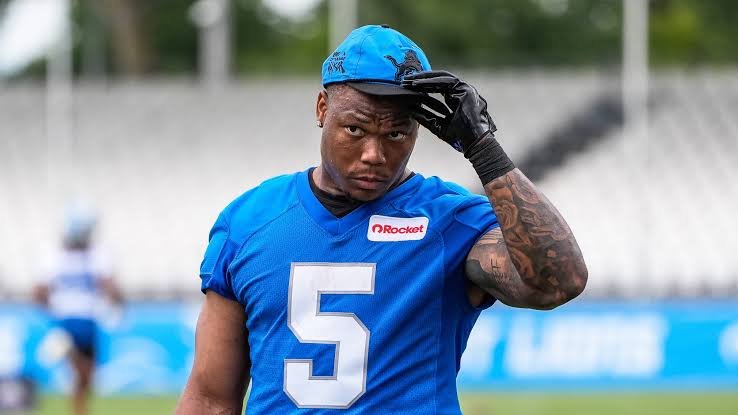
David Montgomery’s name is starting to surface more often in offseason trade discussions, and there’s a realistic scenario in which Detroit could receive an offer that’s simply too strong to dismiss.
When the Lions promoted John Morton to offensive coordinator following Ben Johnson’s departure, it wasn’t difficult to imagine how the running back usage might change. A gradual move toward Jahmyr Gibbs—who is younger, faster, and more versatile—felt like a logical evolution of the offense.
That transition didn’t just happen; it accelerated dramatically. Through 15 games, Gibbs handled 207 rushing attempts and totaled 279 touches, while Montgomery logged 140 carries and 161 touches. The snap distribution told an even clearer story: Gibbs was on the field for roughly two-thirds of the offensive plays, while Montgomery hovered closer to one-third.
At one point, head coach Dan Campbell publicly emphasized the need to get Montgomery more involved, and for a brief stretch, it looked like that might happen. Montgomery recorded 39 carries over the next three games. But that momentum faded quickly.
Over the following six contests, he managed only 36 rushing attempts, including a puzzling Week 16 performance where he touched the ball just four times and played only 13 snaps.
Even more telling, Montgomery logged fewer than 20 offensive snaps in three consecutive games before Christmas Day against Minnesota, when he finally saw the field for 22 of 64 snaps and reached double-digit carries for the first time since Week 10.
Campbell repeatedly mentioned wanting to increase Montgomery’s workload, yet the reality on the field never matched the rhetoric. Since Campbell himself has handled play-calling duties since Week 10, the lack of follow-through stands out. Game flow hasn’t consistently forced Montgomery out of the plan, making his reduced role even harder to explain.
As Montgomery approaches what is often considered the back end of a running back’s prime—he’ll be 29 before the 2026 season begins—his diminishing usage has naturally sparked uncomfortable questions. While Montgomery isn’t known for publicly voicing frustration, subtle signals have emerged. A recent Instagram post showing his pads sitting unused in a locker suggested he may feel sidelined.
Why Trading Montgomery Could Make Sense
The idea of dealing Montgomery won’t sit well with many Lions fans, and there’s little indication he would formally request a move. Still, if his role continues to shrink, it becomes increasingly difficult to justify his contract. He currently ranks among the league’s dozen highest-paid running backs based on average annual value, and Detroit will soon need financial flexibility—especially with a lucrative extension for Gibbs looming.
Per Over The Cap, moving Montgomery before June 1, 2026 would result in $4.86 million in dead money from his $8.37 million cap hit. Waiting until after June 1 would free up closer to $6 million. Simply cutting him would make little sense given his potential trade value.
If Detroit does explore a deal, they would almost certainly seek meaningful compensation. A contributor who can help immediately would be essential, likely paired with a draft pick. That narrows the list of realistic trade partners—but doesn’t eliminate it.
Enter the New York Jets.
With Aaron Glenn now leading the Jets as head coach and former Lions assistants Tanner Engstrand and Steve Heiden on the offensive staff, there’s a strong organizational connection. Assuming staff continuity, familiarity with Montgomery and the offensive system would make New York a logical destination.
There’s also uncertainty in the Jets’ running back room. Signs point toward Breece Hall departing in free agency, leaving a shortage of proven options. Adding a veteran runner who already understands the coaching philosophy could provide stability.
The Jets also possess ample draft capital over the next two years, giving them flexibility to negotiate. That opens the door to a creative trade framework that addresses needs for both teams.
A Hypothetical Trade Worth Considering
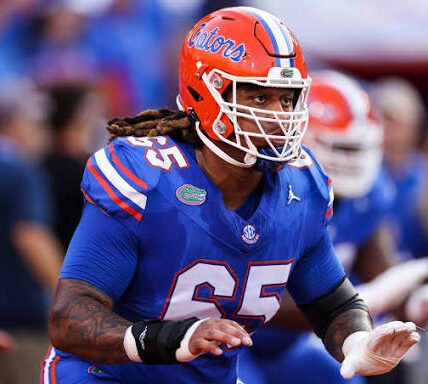
One intriguing possibility would involve Jets offensive lineman Joe Tippmann. Selected in the second round in 2023, Tippmann spent most of his early career at center before shifting to right guard following the arrival of veteran center Josh Myers.
While Tippmann has been serviceable at guard—ranking 32nd at the position according to Pro Football Focus entering Week 17—his natural position appears to be center. In fact, he graded as PFF’s eighth-best center in 2024. With Myers under contract through 2027, Tippmann is effectively blocked from returning to that role in New York.
For Detroit, Tippmann could represent a long-term answer at center as Frank Ragnow ages. At just 24 years old, he fits both the timeline and positional need.
Jets fans might cringe at the idea of moving Tippmann, but as a player drafted by the previous regime and currently displaced positionally, he could be viewed as a valuable trade chip. Pairing a player-for-player swap with a modest draft pick adjustment could benefit both franchises—giving Montgomery a fresh start while providing the Lions with a young building block for the future.
In the end, it’s the kind of proposal that checks a lot of boxes, and one the Lions would have a hard time ignoring.