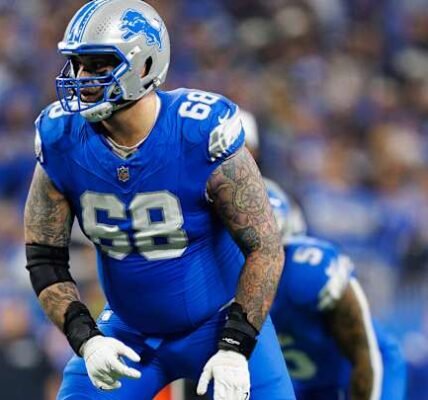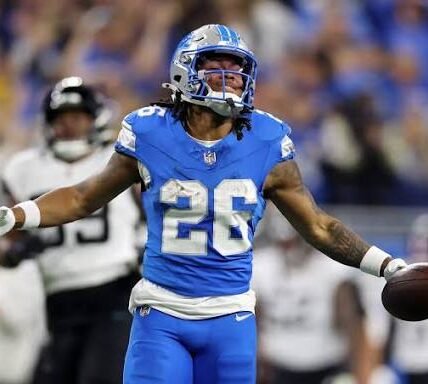
The Detroit Lions face criticism after releasing a player who quickly signed with another team.

The Detroit Lions have been fairly active during National Football League free agency, completing several notable moves. One example came on Thursday, March 12, when the team officially added running back Isiah Pacheco, who previously played for the Kansas City Chiefs. While the Lions have brought in new talent, they have also allowed a few players to leave, and one particular departure has already sparked debate.
On Wednesday, March 11, Detroit allowed defensive end Al-Quadin Muhammad to depart in free agency. It didn’t take long for him to find a new opportunity, as he soon agreed to a one-year contract worth up to $6 million with the Tampa Bay Buccaneers, according to contract data tracked by Spotrac.
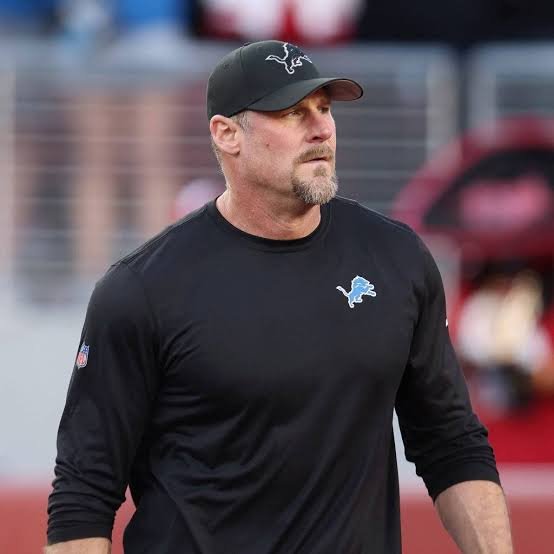
The Lions’ front office and head coach Dan Campbell must carefully manage the salary cap, which inevitably forces the team to part ways with some contributors before the 2026–27 campaign. Still, Muhammad’s exit surprised some observers because he wasn’t expected to command a massive new deal. Detroit’s pass-rush unit is also thin, especially with Aidan Hutchinson lacking a high-profile edge partner. Because of that, critics believe the move could end up hurting the team.
Muhammad, who entered the league in 2017, attracted quick interest from Tampa Bay largely because of his strong performance last season. According to statistics compiled by Pro Football Focus, he delivered the best campaign of his career in 2025–26, finishing with 11 sacks, 53 total pressures, and 32 quarterback hits.
Financially, Detroit might have been able to retain him. Salary-cap tracking from Over the Cap shows the Lions still holding about $30.2 million in available space. Considering those resources, some analysts view the decision to let Muhammad walk as puzzling, particularly after the team invested time developing him into a productive pass rusher.
In a March 14 article for Detroit Jock City, writer Richard Louis suggested the decision could end up troubling the franchise later. He indicated that Muhammad, who played college football at the University of Miami, appeared open to returning to Detroit, but the organization did not show the same level of interest. According to Louis, situations like that may not go unnoticed inside the locker room—especially when a player coming off his best season still doesn’t receive another contract offer.
Louis also raised the issue of how Detroit plans to fill the vacancy on the edge. Replacing a defender capable of producing double-digit sacks and more than 50 pressures is not easy, and the market for available pass rushers is shrinking as more free agents sign with new teams. Because of that, the Lions may ultimately look to the 2026 NFL Draft to address the position.
At the same time, the team has continued to make smaller, short-term additions. For instance, the Lions signed tight end Tyler Conklin—a Michigan native who played college football at Central Michigan University—on March 13. Although the exact terms were not publicly released, projections from Spotrac estimate the deal to be around $3 million for one season.
Detroit’s strategy of offering affordable one-year contracts helps maintain flexibility, but it also raises questions among some observers. As other franchises aggressively build rosters they hope can compete for a championship, skeptics wonder whether the Lions’ cautious approach will be enough to push them all the way to the Super Bowl. Nevertheless, general manager Brad Holmes and Campbell have built considerable credibility around the league, leaving many fans willing to trust the direction of the organization and see how the plan unfolds.