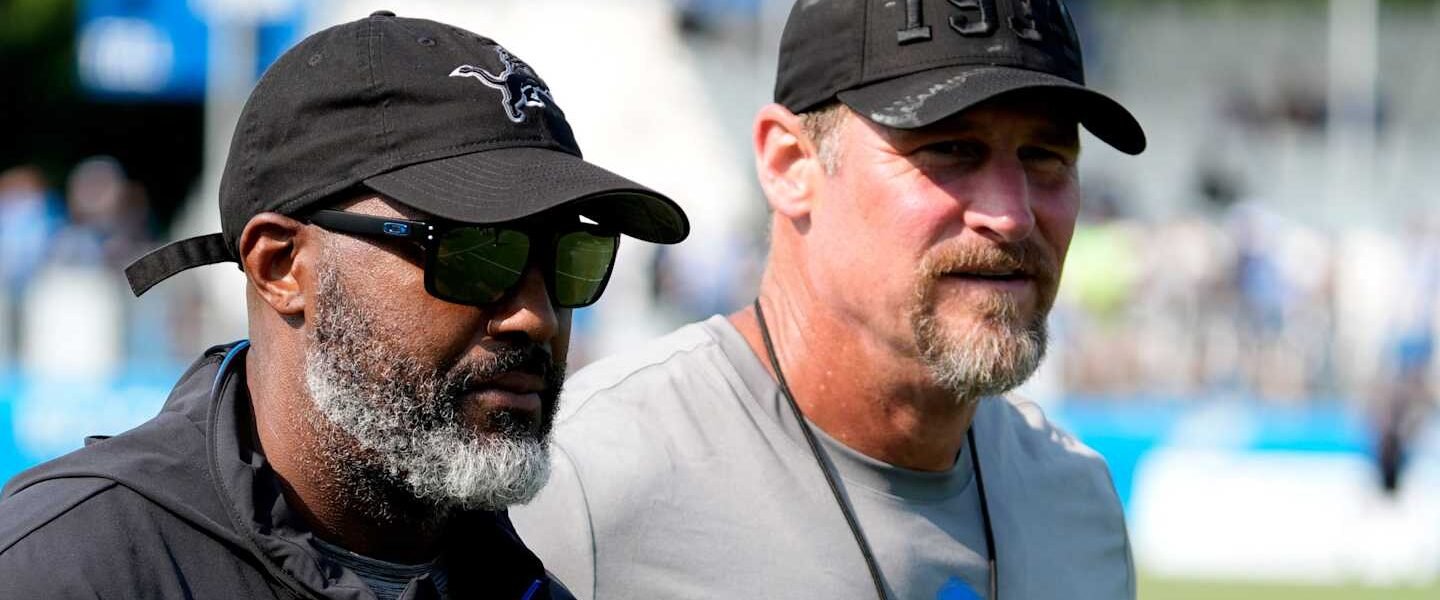
Mike Valenti Shares Stunning Claim Involving Dan Campbell and Brad Holmes

The Detroit Lions have spent the past few seasons establishing themselves as one of the NFL’s most well-run and respected organizations. However, a recent rumor suggests there could be some internal differences when it comes to shaping the roster moving forward.
If you’ve followed this offseason closely, that possibility might help explain why things have felt a bit unusual.
Compared to previous years, Detroit hasn’t made many splashy moves in free agency. Instead of aggressively chasing big-name players, the team has opted for a more cautious strategy—letting some veterans walk and bringing in younger talent, often on short-term deals. While that approach isn’t necessarily flawed, it’s not what many expected from a team that appears close to championship contention.
There’s no doubt the Lions still have a strong core capable of competing at a high level. But some of the decisions around that core have sparked debate, especially given how the last two seasons ended.
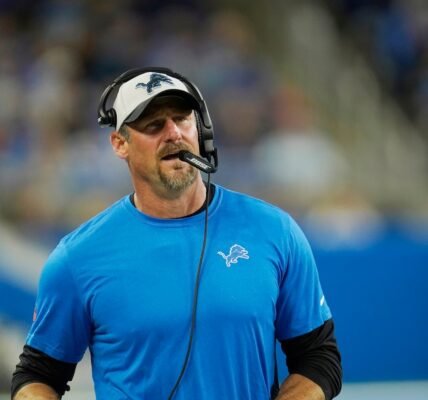
The discussion gained momentum after comments from Mike Valenti of 97.1 The Ticket. During a recent segment, he hinted at something notable behind the scenes. According to Valenti, a team source indicated that this could be the first offseason where Dan Campbell and Brad Holmes have shown clear differences in how they believe the roster should be constructed.
That kind of statement naturally grabbed attention and didn’t go unnoticed among fans.
When you consider their backgrounds, the idea isn’t far-fetched. Campbell has built his identity around toughness, effort, and competitiveness, often favoring players who bring energy and have something to prove—traits commonly found in younger talent.
Holmes, on the other hand, has experience with a more aggressive team-building philosophy, influenced by his time with the Los Angeles Rams. That approach has typically included bold moves, such as trades for established players or significant free-agent signings.
If those perspectives are blending, it could explain Detroit’s current direction—getting younger, prioritizing depth, and avoiding long-term financial risks.
Still, this is no longer a team in rebuilding mode. The Lions have already proven they can win consistently and have come close to reaching the Super Bowl. Expectations are now much higher.
At the same time, the way the past two seasons ended—particularly the playoff loss to the Washington Commanders—left a sense that the team might respond with more urgency this offseason. Instead, their approach has leaned toward patience.
That doesn’t make it the wrong decision, but it does invite questions. And if there are indeed differing opinions internally, it would make sense why the strategy looks the way it does.
It’s also worth noting that disagreements within a front office aren’t always negative. In many cases, they can lead to better outcomes by forcing more thorough decision-making. What matters most is that both Campbell and Holmes remain aligned on the ultimate goal—winning.
They’ve already worked together to transform Detroit into a contender. However, this is the first time there’s been meaningful chatter about potential philosophical differences between them.
Combined with an offseason that hasn’t fully met expectations, that chatter has only grown louder.
For now, it remains just a rumor—but one worth keeping an eye on.
The Lions are in a crucial stage. Their core is established, expectations are high, and the room for error is shrinking. The way they continue to build this roster could ultimately determine whether they take the final step toward a championship or fall short once again.