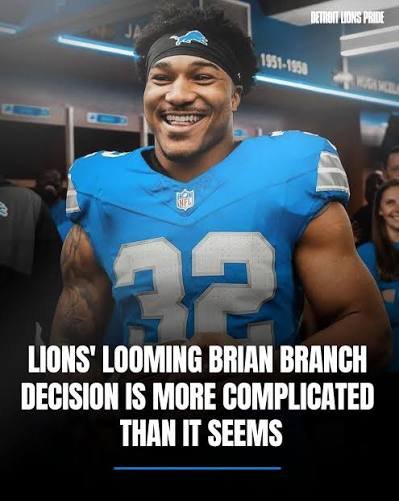
The Detroit Lions face a more complex decision on Brian Branch than it may initially appear.

It has started to sound like a familiar explanation. Other teams facing situations similar to the Detroit Lions still manage to make impactful roster moves, yet general manager Brad Holmes continues to emphasize the financial pressure created by a growing list of homegrown players who have earned lucrative second contracts.
That pipeline is only getting larger. As soon as this offseason, both Jahmyr Gibbs and Jack Campbell could command deals that make them the highest-paid players at their respective positions. Still, the reality the Lions may eventually face is the same one many successful teams encounter: it becomes impossible to keep everyone.
That dilemma could soon involve safety Brian Branch. In a recent analysis, Alex Kay of Bleacher Report highlighted several contract extensions teams might want to reconsider, placing Branch at the top of the list for Detroit.
Lions advised to delay a major extension decision
During an appearance on the Lions Collective podcast, Holmes expressed confidence that Branch will eventually recover fully from his injury. Meanwhile, Justin Rogers of Detroit Football Network pointed out that modern surgical techniques have significantly improved recovery timelines for Achilles injuries.
Even with those advancements, Branch is expected to miss some time at the beginning of next season. Questions about how quickly he can return to form will likely linger until he proves it on the field. Another factor complicating matters is his disciplinary record, as he has been fined 15 times over three seasons for various on-field infractions.
Because Branch was selected in the second round, the Lions do not have the luxury of a fifth-year option on his rookie deal. That means he will enter the final year of his contract without that built-in buffer. Despite that timeline, the team may be wise to hold off on offering a major extension right away.
Before committing long-term money, Detroit may want to see evidence that Branch can fully rebound from his Achilles injury and reduce the penalties that have repeatedly cost him financially. Only then would the front office have clearer confidence in making a substantial investment.
If Holmes ultimately reaches the point where difficult financial choices must be made, Branch could find himself caught in that reality—raising legitimate questions about his long-term future in Detroit.