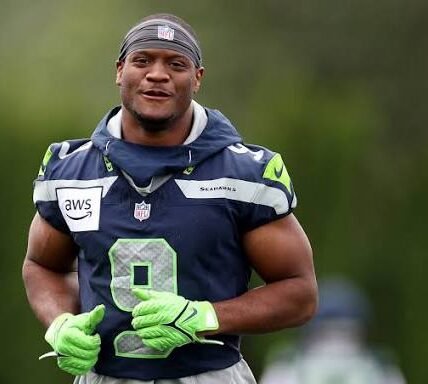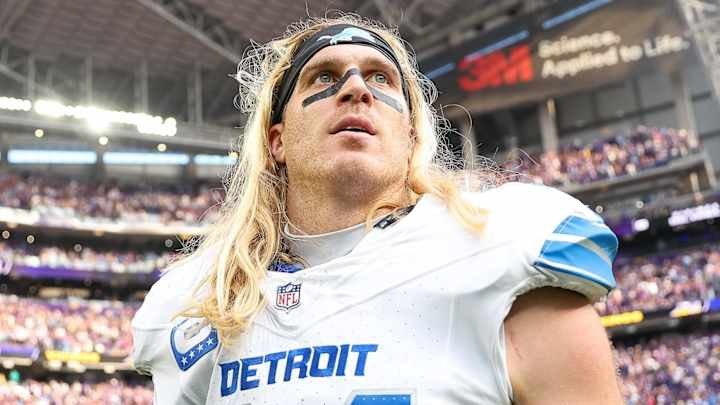
Former Detroit Lions linebacker Alex Anzalone shares why supporters of the New York Jets can feel confident about Aaron Glenn.

New York Jets fans remain skeptical about Aaron Glenn — and the doubts are understandable. His first year as head coach was extremely difficult, filled with questionable in-game decisions and tense interactions with reporters during press conferences.
Still, one thing that stands out is the respect Glenn continues to receive from players who previously played under him. That admiration helped attract experienced defenders like Demario Davis and David Onyemata to New York during free agency.
Another name that was connected to the Jets earlier in the offseason was former Detroit Lions linebacker Alex Anzalone. His previous working relationship with Glenn in Detroit reportedly made him a potential fit for the team.
Ultimately, Anzalone chose a different path, signing a two-year contract worth $17 million with the Tampa Bay Buccaneers. Despite going elsewhere, he has made it clear that he still holds Glenn in very high regard.
Alex Anzalone explains why Jets fans should believe in Aaron Glenn
During a conversation with NFL reporter Jordan Schultz, Anzalone was asked why supporters of the Jets should remain optimistic about Glenn leading the franchise through its rebuilding phase.
Confidence around the Jets organization is understandably low after the struggles of last season. Many fans feel Glenn could be coaching on borrowed time heading into Year 2. However, there are signs suggesting things could improve.
Several of Glenn’s former players have publicly backed him, including Alvin Kamara of the New Orleans Saints. Their support suggests Glenn has earned strong respect inside locker rooms.
Glenn has also shown signs of learning from his first year as a head coach. His media appearances during the 2026 offseason have been less frequent, and his tone with reporters appears noticeably calmer than before.
Additionally, Glenn plans to take more responsibility this season by personally calling defensive plays instead of delegating the task to Steve Wilks as he did last year. That decision puts the success or failure of the defense squarely on his shoulders.
For fans searching for reasons to stay hopeful, the trust expressed by Glenn’s former players may be the strongest endorsement available. Of course, for those who already lost faith, that reassurance may not change much.
NBC places Aaron Glenn among the NFL’s lowest-ranked head coaches
The Jets enter the 2026 season in a fragile position, and Glenn’s job security could depend heavily on immediate improvement. His reputation around the league has taken a significant hit after last season.
Even though the team made moves in the offseason aimed at fixing some problems, certain analysts remain unconvinced that Glenn can reverse the situation.
In NBC analyst Patrick Daugherty’s annual ranking of NFL head coaches, Glenn finished 22nd overall. The coaches ranked below him were primarily newcomers, effectively placing Glenn at the bottom among returning head coaches.
Much of the criticism stems from the Jets’ poor defensive performance in 2025, particularly their inability to generate turnovers.
Daugherty acknowledged that Glenn faced an extremely difficult situation after the team traded star defenders Sauce Gardner and Quinnen Williams. Still, he argued that those circumstances cannot fully excuse the team’s struggles.
Glenn ranked worst among returning NFL head coaches
The Jets finished the season with a 3–14 record. Their quarterback situation played a major role in that outcome, with Justin Fields leading a group widely considered one of the weakest in the league.
Glenn initially believed he could quickly guide the roster he inherited from former head coach Robert Saleh to success. Instead, he discovered that many players were not suited for the defensive system he wanted to implement.
.His tense interactions with the media during that difficult stretch likely did little to help public perception.
However, there are encouraging signs moving forward. The NFL’s annual player satisfaction survey reportedly showed that Jets players enjoy playing under Glenn. Meanwhile, the team added several key contributors in free agency and upgraded the quarterback position with veteran Geno Smith.
Glenn understands that patience will be limited. If the team fails to show progress quickly, his tenure in New York could end sooner rather than later.
Aaron Glenn discusses defensive plans for the 2026 season
The Jets defense is undergoing a significant transformation ahead of the new season. Numerous players arrived during free agency, and Glenn will now oversee defensive play-calling alongside assistant coach Brian Duker following the departure of Wilks.
Observers have speculated that the Jets could shift from a traditional 4-3 alignment to a 3-4 structure. Glenn, however, avoided committing to either system.
Instead, he described the defense as “multiple,” emphasizing flexibility rather than a single fixed scheme.
Glenn wants a versatile defensive identity
Certain offseason moves suggest the team might lean toward a 3-4 look. Prospects like Arvell Reese and David Bailey could fit well as outside linebackers in that system. Additionally, the signing of T’Vondre Sweat points toward interest in a traditional nose tackle role.
However, other acquisitions — including Onyemata and Joseph Ossai — align more naturally with a four-man front.
Glenn has historically favored a 4-3 setup, which raises questions about whether he would dramatically change schemes during a season where he is personally calling plays.
Regardless of the alignment, versatility appears to be the priority. Players like Minkah Fitzpatrick can operate both deep and near the line of scrimmage, while Onyemata’s positional flexibility gives the defense additional adaptability.
When draft decisions arrive, Reese may have an advantage because of his ability to line up both as a linebacker and an edge defender — a skill set that matches the team’s desire for flexibility.
Glenn has spoken confidently about the progress made during the offseason. However, a fanbase that has endured years of disappointment will likely wait for results on the field before believing the optimism.
Glenn tries to reconnect with the Jets fanbase
Facing growing doubts about his leadership, Glenn has tried to connect with fans in a more personal way.
During league meetings, he became emotional while discussing his dream of guiding the Jets back to the playoffs — something the team has not accomplished since 2010.
Glenn previously played for the Jets from 1994 to 2001, and he has repeatedly spoken about wanting to finish what he started with the organization.
He explained that his ultimate goal is to build a franchise capable of competing every season and sustaining success long after his tenure ends.
His honesty has been refreshing to some observers, particularly after a season in which many of his press conferences were tense and uncomfortable. Critics pointed to moments like Glenn celebrating on the sideline during a loss to Tampa Bay as examples that frustrated fans and media alike.
Still, Glenn has not shied away from accepting responsibility. Earlier this year, he admitted he felt he had let both the players and the organization down after the disappointing 3–14 season.
Few people expected the Jets to be contenders in 2025, but the trades of Gardner and Williams — combined with a defense that failed to record a single interception — made the season far worse than anticipated.
Glenn insists he is focused on figuring out how to push the team beyond its long-standing struggles and build a sustainable winner.
For many fans, hearing that kind of sincerity is a welcome change. Whether it will translate into victories on the field remains the bigger question.
Aaron Glenn reflects on Justin Fields’ struggles in New York
One of the Jets’ biggest gambles last season involved acquiring quarterback Justin Fields. Unfortunately for the organization, the experiment failed to deliver the results they hoped for.
Fields started nine games and finished with a 2–7 record before eventually losing the starting job late in the year.
While his stat line looked respectable — seven touchdown passes compared to only one interception — the offense lacked explosiveness. Fields averaged just 139.9 passing yards per game, highlighting the team’s ongoing struggles to move the ball effectively through the air.