Insider Reveals Why the Lions Shockingly Chose Drew Petzing Over Mike McDaniel

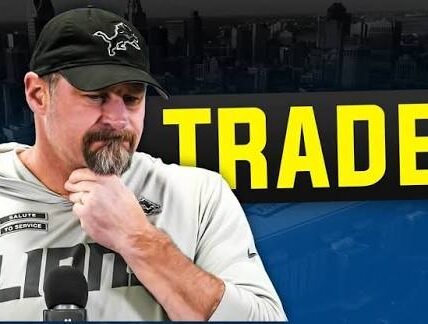
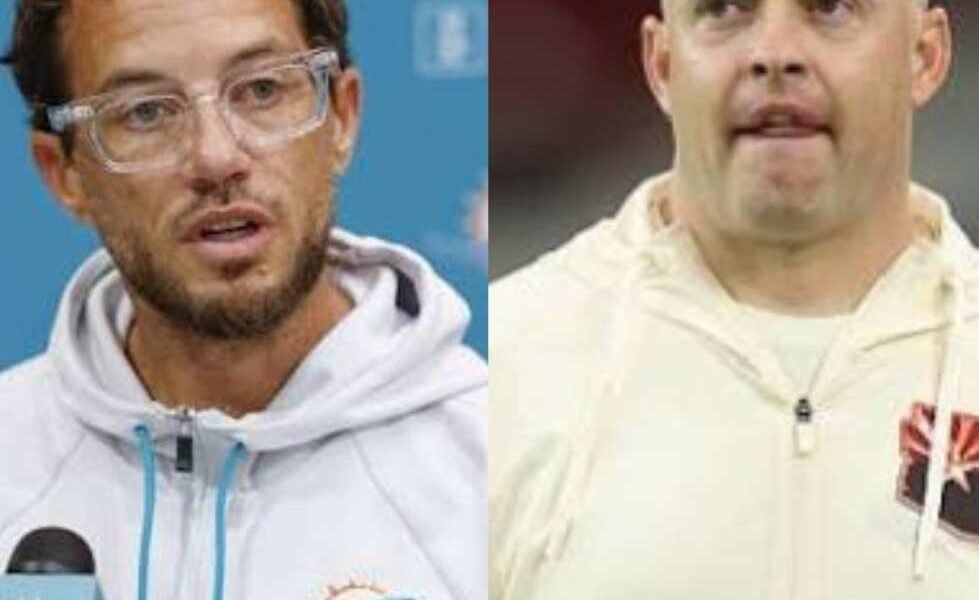
On January 19, 2026, the Detroit Lions made a coaching decision that sent ripples through their fanbase—but not in the way splashy hires usually do. In a cycle dominated by star names, head coach Dan Campbell opted for alignment over allure, hiring former Arizona Cardinals offensive coordinator Drew Petzing while passing on one of the league’s most coveted offensive minds, Mike McDaniel.
To many fans, the move was puzzling. McDaniel, freshly departed from Miami, is widely viewed as one of the NFL’s elite offensive architects—a master of pre-snap motion, spacing, and modern “eye candy” designed to stress defenses horizontally and vertically. But for the Lions, the decision was never about who carried the bigger reputation. It was about who best fit the blueprint.
Identity First, Always
Detroit’s 2025 season served as a cautionary tale. After Ben Johnson’s departure to Chicago, the Lions offense struggled to find consistency under John Morton. Eventually, Campbell reclaimed play-calling duties midseason—an unmistakable signal that Detroit’s physical, “kneecap-biting” identity had slipped.
When Campbell evaluated offensive coordinator candidates, he wasn’t searching for a radical system overhaul. He was searching for a reset. Drew Petzing represents that return to form.
Petzing’s offensive philosophy is rooted in power and balance: under-center formations, multiple tight-end sets, and a run game designed to impose will. If McDaniel’s offense is often described as “basketball on grass,” Petzing’s approach more closely resembles a heavyweight bout. For a roster built around the complementary skill sets of Jahmyr Gibbs and David Montgomery, a run-first, play-action-heavy scheme fit Detroit like a glove.
Built-In Chemistry Matters
Beyond X’s and O’s, the Lions placed a premium on internal cohesion. Petzing arrives in Detroit with an important built-in connection—previously working alongside Lions run-game coordinator and offensive line coach Hank Fraley during their time together with the Minnesota Vikings from 2014 to 2017.
In Detroit, the offensive line is the engine that drives everything. By pairing Petzing with Fraley, Campbell ensured instant alignment between the play-caller and the unit that defines the team’s identity. While Campbell reportedly admired McDaniel’s brilliance, there were lingering questions about how McDaniel’s high-autonomy coaching style would integrate into Detroit’s collaborative, culture-driven environment.
Petzing, by contrast, is viewed as a grinder—someone who amplifies an existing culture rather than reshaping it.
A Calculated Risk, Not a Blind One
Passing on McDaniel doesn’t come without risk. Petzing’s 2025 season in Arizona was underwhelming on paper, with the Cardinals finishing near the bottom of the league in rushing efficiency. Context, however, matters. Arizona endured a brutal wave of injuries, ultimately starting Jacoby Brissett for much of the season and rarely fielding a healthy offense.
The Lions are betting on the version of Petzing who, in 2024, guided an offense that ranked inside the top ten in EPA per play. With Detroit’s superior supporting cast—Sam LaPorta, Amon-Ra St. Brown, and an elite (if recently banged-up) offensive line—the belief is that Petzing’s system will finally reach its full potential.
The Right Hire Over the Flashy One
As Mike McDaniel heads west to coach Justin Herbert in Los Angeles, Detroit moves forward with a coordinator who mirrors its head coach in philosophy and temperament. For the Lions, this was never about winning the offseason headline—it was about reinforcing an identity.
In Detroit, the splash took a backseat to the blueprint. The 2026 season will ultimately determine whether Dan Campbell’s instincts were right—but the logic behind the decision is undeniable.