Lions must correct their lone offseason mistake – here’s the path forward

Detroit faces a pass rushing issue. Addressing it could determine their ultimate fate in the NFC North.
The Detroit Lions, as plenty of fans likely expected, are dealing with a pass rush concern.
Through their first two games, the numbers make it clear: they were overmatched against a strong Green Bay offensive line, but completely handled a struggling Chicago front.
That’s a decent, not dominant, sign for Detroit’s defense early on. Nothing revolutionary, and not encouraging for a team that recently insisted they were fine passing on Za’Darius Smith in free agency.
Currently, the Lions sit near the bottom of the league in pressures generated through two contests, and even four sacks against Chicago don’t change that. The reality is Detroit isn’t reaching quarterbacks with consistency, and they’re giving up nearly three seconds on average per throw.
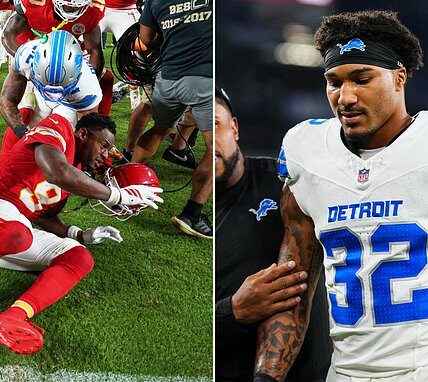
After a worrisome injury to Marcus Davenport — which ironically happened during a sack — it’s evident the team must look elsewhere for help before depending too much on Al-Quadin Muhammad, Pat O’Connor, or Mekhi Wingo to deliver similar output. Here’s how Detroit can address the pass rush via trade.
Lions could strike the trade market for defensive help before it’s too late
Micah Parsons is untouchable, T.J. Watt and Myles Garrett are locked into deals, and Trey Hendrickson won’t be available until next offseason. Other possible trade targets include Brian Burns of the New York Giants, or Chop Robinson and Bradley Chubb from the stumbling Miami Dolphins.
Both clubs make sense as trade partners for two reasons: they look headed toward rough seasons, and neither competes in Detroit’s division. That gives the Lions an opening to dangle premium draft capital for franchises trying to reset. Miami especially fits the mold, while New York has already built a promising young core from recent drafts.
Green Bay sacrificed two first-rounders for Parsons, thankfully, few players beyond Aidan Hutchinson or Myles Garrett would command such a haul. The Packers also parted with Kenny Clark, and Miami might similarly push Detroit for someone like Wingo, Tyler Lacy, or Muhammad in addition to picks.
At present, Detroit controls a first and second rounder plus two third-round selections (one via Jacksonville in the Isaac TeSlaa trade, and another awarded by the league). That gives them enough draft ammunition to pursue Miami or another club for a legitimate pass rusher.
With Muhammad’s workload expanding, maybe Detroit won’t feel compelled to act before the November 4 deadline. Still, if they want a true edge presence to replace Davenport, the trade market remains their best immediate answer — though it will come at a cost. That’s the consequence of waiting too long on Smith.