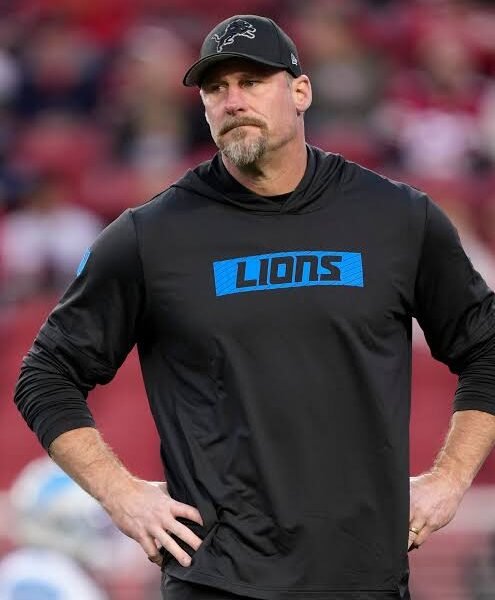

Following the Detroit Lions’ 30–17 defeat to the Kansas City Chiefs on Sunday night, a disputed first-quarter penalty erased a touchdown — and now, controversy is brewing.
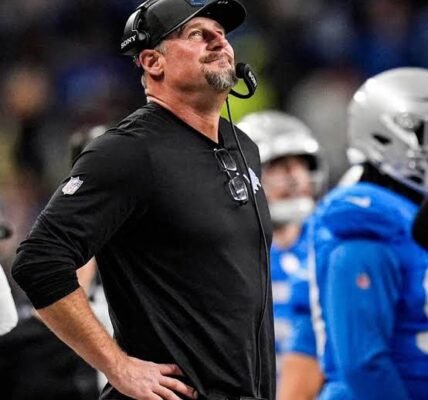
Head coach Dan Campbell maintains that an on-field official told him the call originated from New York, referring to the NFL’s officiating command center. That’s a serious accusation because the play in question, an illegal motion penalty on Jared Goff during a trick play, is not subject to review under league rules.
However, referee Craig Wrolstad told reporters the exact opposite.
So who’s right? Because clearly, someone isn’t being honest.
What Occurred on the Play
Early in the opening quarter, the Lions executed what appeared to be another creative design from offensive coordinator John Morton — a clever misdirection play intended to fool Kansas City’s defense.
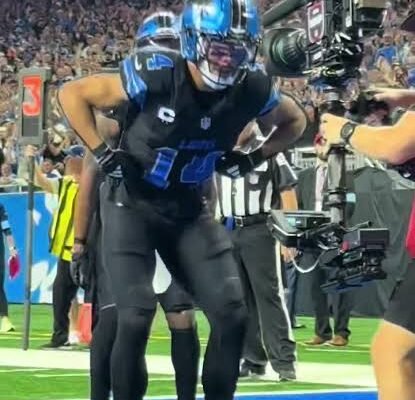
Goff walked toward the line of scrimmage, briefly paused as if preparing to take the snap, then shifted into motion. Running back David Montgomery received the snap and threw it back to Goff, who found the end zone for what looked like a touchdown.
Then confusion set in.
There was no flag during the play itself. In fact, nearly a minute and a half elapsed before officials finally threw one, nullifying the touchdown and calling Goff for illegal motion.
The Rule and the Dispute
According to the NFL rulebook, Rule 7, Section 4, Article 2, Item 3, a quarterback aligned in the T-formation may go in motion only if he pauses for at least one full second before the snap.
Wrolstad later explained that his crew was trying to decide whether Goff had paused twice — once when he approached the line, and again before moving laterally.
“There was some confusion among us about whether he stopped at first or stopped at the end,” Wrolstad said. “That’s why the flag came in late.”
But here’s the issue: Campbell claims one of the officials directly told him that New York provided input during that extended delay.
That’s not permitted. Referees can only consult the command center on reviewable situations — turnovers, scoring plays, or timing corrections. Illegal motion does not qualify.
The Lions’ Reaction
Campbell, visibly upset after the game, said the Lions forwarded the video to the league office for examination. While he couldn’t share the league’s response, he made it clear that something about the explanation didn’t add up.
On Wednesday, during an appearance on 97.1 The Ticket’s Costa and Jansen Show, Campbell reaffirmed that an on-field official told him the decision came from New York.
The coach isn’t known for baseless claims — his reputation for honesty among players, fans, and media is unquestioned.
So if his version holds true, and Wrolstad’s report denies any outside communication, the NFL has a serious credibility problem.
A Timeline That Doesn’t Line Up
Here’s how it unfolded:
Play runs — Goff scores on a trick play.
No flag. Officials hold a long discussion.
Flag appears. Touchdown erased.
Ref says confusion among crew caused the delay.
Campbell says the direction came from New York.
If Wrolstad’s team was simply debating internally, as he stated, why did it take 90 seconds? And why would an official tell Campbell otherwise?
Even stranger, this wasn’t a gray-area ruling — either Goff paused properly or he didn’t. The long delay doesn’t match the stated reasoning.
The NFL’s Integrity Question
I f Campbell’s account is correct and New York influenced the call, that would break league policy and raise serious concerns about the fairness of the officiating process.
The NFL has long faced criticism over officiating inconsistency, but rarely does a coach’s statement so directly contradict an official’s public account.
Fans have witnessed countless questionable flags, yet this incident feels different. It’s not about interpretation — it’s about truth.
Dan Campbell insists New York made the call. Craig Wrolstad insists it didn’t. Someone isn’t telling the truth.
Until the NFL offers a transparent explanation of what really occurred during that bizarre first-quarter sequence, the controversy will only deepen.
The Lions lost a touchdown — and perhaps something even more important — a measure of trust in the league’s integrity.