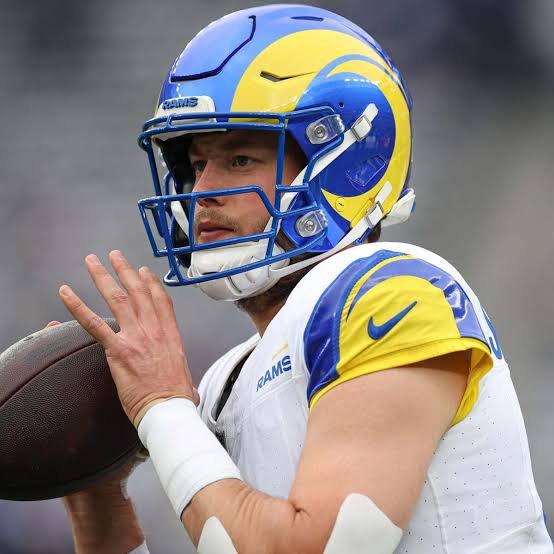

For years, the Detroit Lions stalled under Matthew Stafford’s leadership. When the franchise prepared to undergo yet another overhaul, the veteran quarterback approached ownership—emotionally, by all accounts—and asked out rather than enduring another rebuild. Instead of committing to the long process ahead, Stafford chose a fresh start.
That decision, however painful at the time, dramatically altered Detroit’s trajectory. General manager Brad Holmes used the extra draft capital from Stafford’s trade to reshape the roster with young, long-term contributors. Jared Goff, considered expendable by Rams coach Sean McVay, arrived in Detroit and became the steady, dependable presence the franchise desperately needed during its reset.
Despite Stafford’s reputation as a gifted passer with remarkable arm talent, his postseason résumé in Detroit was thin. Over a dozen seasons, the Lions reached the playoffs only three times and never won a game, finishing 0–3 in the postseason with the former No. 1 pick under center. Fans marveled at his ability to manipulate defenses, but the flashes of brilliance were often offset by poorly timed turnovers. Even without elite weapons surrounding him, Stafford shared responsibility for the team’s repeated stumbles.
Sometimes, a franchise simply needs a quarterback who avoids catastrophic mistakes and plays within the system. When Stafford departed, he embodied the lingering “Same Old Lions” label—a talented player who consistently fell just short and couldn’t guide the team to meaningful achievements.
Detroit, meanwhile, invested heavily in the offensive and defensive trenches and built a strong supporting cast. Those foundational pieces allowed the team to grow, battle through adversity, and eventually taste the playoff success that once seemed unreachable.
When asked this week whether the trade was a win for both sides, head coach Dan Campbell pointed to the returns that reshaped the Lions: “We’ve got Sewell, we’ve got Amon-Ra St. Brown, we’ve got a lot of good players—and we’ve got Goff. It feels like a win for us, and I’m sure they feel the same.”
Today, Goff represents Detroit’s best chance at capturing the organization’s long-sought Lombardi Trophy. Stafford, on the other hand, became a symbol of the heartbreak Lions fans endured for years. Rather than commit to a new staff with a clear blueprint, he chose to chase success somewhere else—after Detroit had invested in him and extended him generously in 2017.
When Stafford returned to Ford Field, he was met with boos directed at both him and his family, a reminder of how divided fans felt about his tenure. And with Detroit’s season on the line, facing a quarterback known for risky throws is hardly a worst-case scenario for the Lions.
Where Stafford often teased greatness without delivering, the current Lions embody what winning teams require: discipline, unity, and an unwavering commitment to the collective goal.