
If you’ve been paying attention to recent mock drafts, a clear pattern has emerged for the Detroit Lions. Many projections repeatedly link the team to either an offensive tackle or an edge rusher.
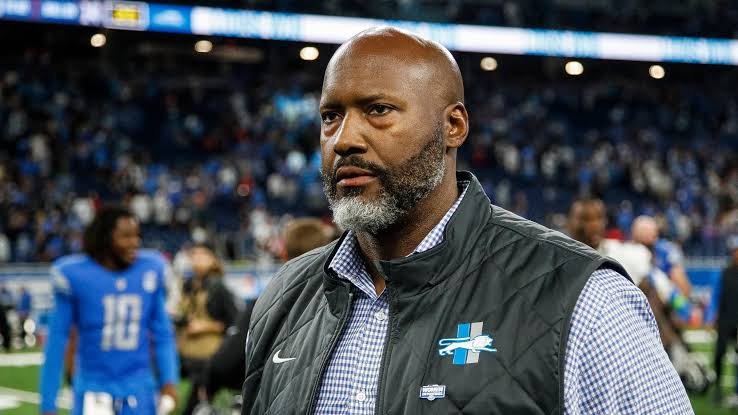
However, comments from general manager Brad Holmes suggest that assumption may not be as certain as many believe.
During his pre-draft media availability on Monday ahead of the 2026 NFL Draft, Holmes explained that Detroit does not feel obligated to address either of those positions early in the draft. The team’s recent moves in free agency have helped provide that level of comfort.
Detroit added veterans Larry Borom and D. J. Wonnum this offseason, both of whom bring starting experience at the NFL level. Holmes pointed to their past performances and the progress they have shown as reasons the team feels confident in its current options.
Holmes noted that Borom put together encouraging film last season and has the tools to perform at a starting level. He expressed similar confidence in Wonnum, highlighting that both players are still relatively young and trending in a positive direction. Because of that, Holmes said the organization does not feel pressured to immediately add competition at those spots.
Even with that confidence, Holmes made it clear the Lions are not ruling out those positions entirely.
He acknowledged that offensive tackle remains one of the league’s most valuable roles. Players at premium positions are difficult to find, which means teams are always open to adding them if the opportunity presents itself. According to Holmes, there are several promising prospects at that position in this year’s class, but Detroit will wait to see how the draft unfolds before making any decisions.
One point Holmes strongly emphasized was the importance of staying disciplined during the draft.
He explained that forcing a pick to fill a perceived need can lead to mistakes. Passing on a player the team truly believes in just to address a roster concern is something he tries to avoid. Holmes admitted those types of decisions tend to linger afterward, which is why the organization prioritizes selecting the best overall value rather than drafting out of urgency.
That philosophy has shaped much of Detroit’s roster-building strategy since Holmes arrived, and it appears that approach will remain unchanged.
Heading into draft night, the Lions find themselves in a favorable position. The roster has enough depth to avoid desperation, and the front office has the flexibility to simply follow the board as it develops.
Detroit could still target an offensive tackle or edge rusher early if the right prospect is available. But based on Holmes’ remarks, such a decision would come from value aligning with the pick—not from pressure to fill a specific hole.
In other words, the Lions plan to remain patient and calculated during the draft process.
Rather than forcing selections, the focus will be on identifying the best players who can strengthen the roster over the long term—a strategy that has already played a key role in the team’s recent progress.