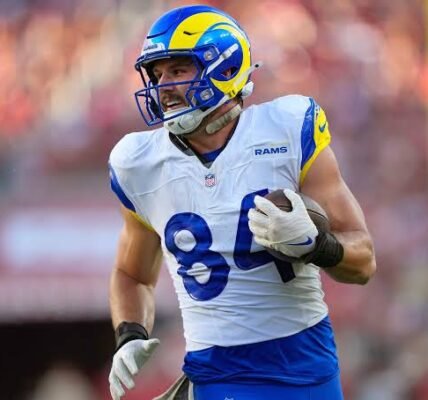
Isaac TeSlaa Could Emerge as a Breakout Star for the Detroit Lions in 2026

The Detroit Lions entered the 2025 campaign with one of the most fascinating young prospects on their roster in Isaac TeSlaa. During the preseason, the rookie generated significant buzz thanks to his rare athletic profile, leading many observers to label him as a potential dark-horse candidate for Offensive Rookie of the Year.
Once the regular season began, however, TeSlaa’s role ended up being fairly limited. Under former offensive coordinator John Morton, he was often used as a situational or package player rather than a consistent option in the offense. The reduced involvement wasn’t due to poor performance, as he made the most of the few opportunities he received, but it meant he never quite matched the early hype surrounding him.
Things could look very different heading into his second season. With a year of NFL experience now behind him and Drew Petzing taking over the offensive system, TeSlaa may find himself in a much more prominent role. Because of that change, he once again shapes up as a potential breakout player.
TeSlaa Could Draw Major Attention in 2026
For several seasons, the Lions have hoped that Jameson Williams would evolve into a true superstar. While Williams has shown flashes of elite talent and blazing speed and is coming off a respectable season, consistency and maturity have occasionally been questioned.
Given that context, it wouldn’t be surprising if TeSlaa gradually carved out a larger share of the offense. Even if Sam LaPorta stays healthy and Petzing deploys him in a similar fashion to how he utilized Trey McBride with the Arizona Cardinals, TeSlaa still offers qualities that are hard for any offense to ignore. His explosiveness, ability to track and adjust to the ball in the air, and effectiveness in scoring situations make him a dangerous weapon.
According to Pro Football Focus, TeSlaa ran 296 routes during his rookie season. Those routes resulted in 26 targets, which he converted into 16 catches for 239 yards. Six of those receptions ended in touchdowns, giving him an eye-popping scoring rate of 37.5 percent. While that number is unlikely to remain that high over a longer stretch, it still highlights his composure and ability to finish plays when the opportunity presents itself.
TeSlaa averaged 14.9 yards per reception, trailing only Williams on the team, who averaged 17.2. He also ranked second on the roster in yards per touch with the same 14.9 mark. Although his yards after the catch average (3.4) was lower than Williams’ 6.9, TeSlaa’s average depth of target was actually deeper at 14.8 yards compared to Williams’ 12.7.
Considering his rookie status, it’s understandable that TeSlaa wasn’t featured as heavily as some fans might have hoped. That’s often the case for first-year players adjusting to the professional level. Still, the flashes he showed suggest there’s a strong argument for giving him a larger role moving forward.
Overall, the Lions finished with the fourth-highest scoring offense in the league at 28.3 points per game and ranked third in passing yards per contest with 253.1. Even though those numbers didn’t always translate into victories, the offense demonstrated plenty of firepower. If TeSlaa takes a significant step forward in his second year and provides Jared Goff with another dependable deep threat, Detroit’s offense could become one of the most exciting units to watch during the 2026 season.